Resonance is more combat-forward than the earlier A Plague Tale games. Observe first, distinguish a parry from a dodge, and use Sophia's full tool set instead of repeating one attack. Official material describes a linear action adventure built around melee combat, agile movement, exploration, stealth, and light puzzles; IGN's tips add the sketchbook, charms, blades, skill resets, grapnel, and Focus attacks.
Official overview for identifying the combat, traversal, stealth, and light-puzzle systems discussed below.
- Read the room before committing
- Compare parries with dodges
- Use the grapnel during combat
- Match upgrades to a purpose
- Trace a light-puzzle change
What to know first
Sophia fights with a sword and dagger, moves more directly through danger than Amicia, and can use a grapnel against enemies and parts of the environment. Focus Entertainment's extended gameplay material shows precise parries, quick combinations, movement across gaps, stealth passages, and puzzle spaces driven by a Minoan sphere. That mix means Resonance is not a pure stealth sequel and not a simple arena brawler. It regularly asks you to switch from reading a room to acting quickly inside it.
Treat each room as a system
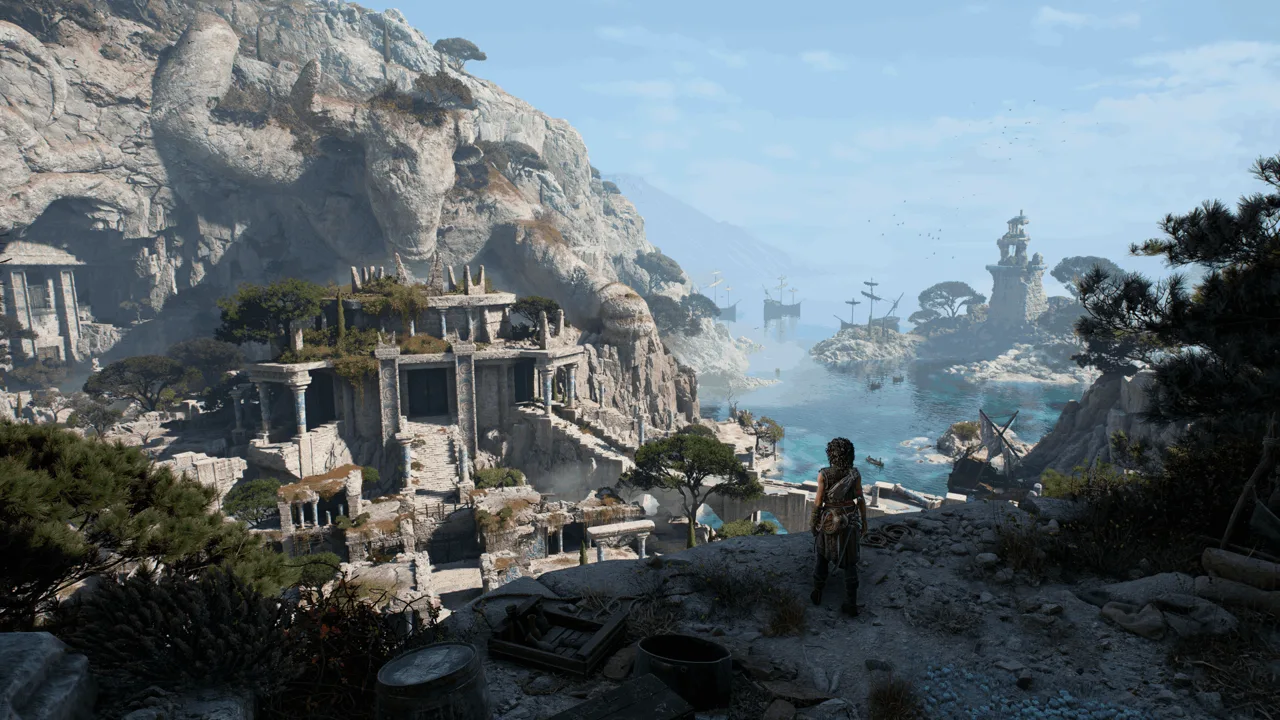
Before committing to a fight, note enemy positions, possible environmental hazards, grapple opportunities, and exits. The official gameplay overview specifically shows the grapnel pulling enemies and throwing them toward hazards. It also confirms that stealth remains present even though direct combat is more central. A room may therefore support several approaches. The useful beginner question is not “Which single move wins?” but “Which tools does this space make safe right now?”
Explore with the sketchbook
IGN's narrated tips explain that Sophia's sketchbook records symbols and clues encountered during exploration. When a puzzle presents unfamiliar shapes, give the game time to register the clue instead of trying random combinations immediately. The Minotaur research shows why this matters: the solution depends on recorded symbol pairs, reflectors, a central mirror, and hidden marks revealed at the statue's hands. The precise symbols belong in the dedicated puzzle page, but the general habit is safe—observe, record, then manipulate the light path.
Exploration also supports progression through charms, blades, artifacts, Resonance Points, and Theseus Echoes. Published totals use different counting rules, so use the chapter interface after the story to identify what remains and check platform-specific trophy behavior separately.
Build a combat rhythm
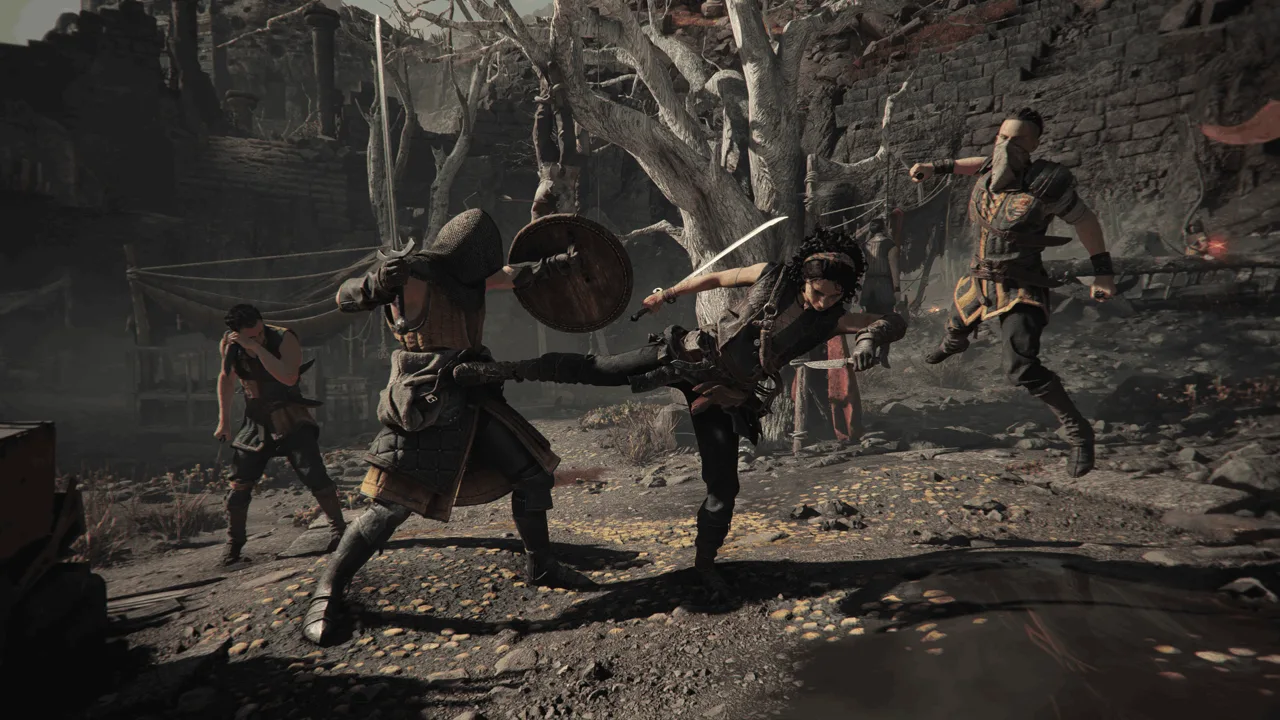
The most important early distinction is between parrying and dodging. IGN's tips describe them as separate defensive answers rather than interchangeable buttons. A parry rewards accurate timing and can create an opening; a dodge prioritizes repositioning and survival. Focus staff later noted that consecutive parry timing can be very short, which helps explain why repeated-parry challenges feel stricter than ordinary defence. Learn the readable single exchange first, then practise sequences. Do not assume that a timing window quoted by a player applies identically across difficulty settings or patches.
Sophia's blades have different passive effects, and charms can be stacked. That makes equipment choice part of the encounter rather than a cosmetic menu. Read the effect text and choose a combination that supports what you are practising. If you are learning defence, a setup that rewards survival may be more useful than one built around an advanced chain. The research does not establish one mathematically best build, so this guide does not label any charm or blade as mandatory.
Use the grapnel as a combat tool, not only a traversal device. Official footage shows Sophia pulling or redirecting enemies and using hazards in the environment. IGN also highlights grapnel use and Focus attacks as parts of the combat vocabulary. The safe takeaway is to look beyond the closest target: an enemy near a ledge or hazard may be easier to control than to defeat through repeated basic strikes. Exact inputs depend on platform prompts, so follow the interface displayed by your version.
Reset skills with a purpose
The collected IGN guide states that skills can be reset. Use that option to test a clear idea rather than changing everything after one failed encounter. Move a small set of points, try the same type of problem again, and watch whether the new tools change your decisions. A reset is most valuable when it answers a question—more control, better defence, or a different resource loop—not when it becomes a substitute for reading enemy attacks.
Use tools and upgrades
The progression systems appear shallower to some reviewers and flexible enough to others. That disagreement is useful context: do not expect a large role-playing build simulator, but do not ignore equipment effects. Check new blades, charms, and skills when they arrive, then return to the field with one or two changes you understand. If a guide claims a universal best loadout without naming its difficulty, patch, encounter, and testing method, treat it as an opinion rather than a settled fact.
Focus attacks and guard-breaking options help prevent combat from collapsing into attack repetition. The IGN tips mention Focus attacks directly, while preview material describes kicks, charged thrusts, blocks, dodges, and parries. Not every move will be available at the same moment in progression. Use the move descriptions and prompts in your current save as the authority on availability, then use external guidance to understand purpose. This avoids following late-game advice before the required skill or weapon has been introduced.
For puzzle tools, the Minoan sphere manipulates light through reflection and refraction. Look for surfaces that receive or redirect a beam, then check what changed elsewhere in the room. If the visible path appears complete but the mechanism does not advance, revisit the clue rather than assuming the controls failed. In the documented Minotaur puzzle, a later symbol pair remains hidden until the statue's hands rise and the rings are illuminated, which demonstrates how a room can reveal a second layer after the first solution state.
Choose the next guide
Choose by the task in front of you:
- Learn the full system mix: read the gameplay guide.
- Solve the Chapter 4 statue room: open the Minotaur puzzle only when you want its answer.
- Plan completion safely: check trophies and achievements before cleanup.
- Fix or assess the PC version: compare system requirements before using the conservative black-screen checks.
If story context is the question, stay with the spoiler-light story guide until you finish. The Sophia character page has a protected spoiler section because ordinary character searches can reveal later connections. This separation is deliberate: a beginner guide should help you start playing, not make every later discovery visible in its headings. The site uses audited publication states, so linked pages may carry different source limits even when each one is clear enough to navigate.
Sources and limits
The main gameplay claims come from Focus Entertainment's extended gameplay overview, the official Steam listing, and IGN's narrated “8 Essential Combat and Exploration Tips” video collected during the research pass. The story timing is supported by Focus and Steam. Completion context comes from PowerPyx, PSNProfiles, and narrated trophy videos, while the Minotaur example comes from two written puzzle guides.
This page does not claim exact platform inputs, universal parry windows, a best build, a required difficulty, or a complete collectible route. Those details either vary by platform and settings or were not established by the source set. Advice attributed to reviewers remains their assessment. Community observations are not converted into official mechanics. Recheck the linked official pages and the in-game prompts after patches; when they disagree with this dated guide, the current game should win.